


36 months to complete
Online Doctor of Education (Ed.D.) in Leadership for Organizations
Updated for the 2026 academic year
Advance your career in as few as 36 months with an online Ed.D. program designed for working professionals.
- Streamlined Application — No GRE required. Choose from three annual start dates.
- Flexible Schedule — Keep working while you study with live online classes and self-paced coursework.
- Career Advancement — Prepare to lead with on-campus immersions, personalized career coaching, and full access to our alumni network.
Ed.D. Online Program Highlights
60 credits
2 on-campus immersions
4 study areas
1 dissertation in-practice
The online Doctor of Education (Ed.D.) in Leadership for Organizations will give students the skills to influence change in organizations and the greater community through service-based leadership. Classes are conducted online, and the online campus experience lets you interact with your professors and colleagues through streamlined, mobile-friendly platforms.
The program’s emphasis on research, collaboration, social justice and applied practice will prepare you to lead mission-driven organizations to success and create positive change in emerging contexts. With the service-based leadership expertise you gain in the program, you’ll graduate ready to manage and enact change in 21st-century school and education systems, healthcare organizations, nonprofits, government agencies, and more.
Accreditation
The Doctor of Education in Leadership for Organizations from the University of Dayton School of Education and Health Sciences is accredited by the Higher Learning Commission. In addition, the program has been accredited as part of institutional accreditation awarded by the National Council for Accreditation of Teacher Education (NCATE).
Learn to Improve Organizations and Communities Through Leadership
Why Earn a Doctor of Education Online at Dayton?
The University of Dayton offers a unique learning experience, thanks to its robust alumni network, earning potential post-graduation, and culture rooted in the Marianist Tradition. These Catholic, Marianist values shape not just our philosophy on education, but on life as well.
Rooted in the Marianist Tradition
UD prides itself on its Marianist values, which consist of:
- Developing the entire student, including their mind, body, and faith
- Providing an education that is high quality and comprehensive
- Fostering a communal and familial spirit
- Educating for service, justice, peace and integrity of creation
- Adapting and changing to suit the times
Our faculty is dedicated to providing an inclusive education to all students. While at the University of Dayton, you will develop a strong mind, benevolent heart and a compelling resume, all of which will guide you into the next chapter of your life.
Graduates Find Success After UD
University of Dayton graduates can see a rise in pay following their graduation. According to survey data, 97% of UD Graduates report being employed within six months of graduation. UD graduates work with top employers like the United States Air Force, GE Aerospace, Premier Health and Honda.
Access to Alumni Network
All Dayton graduates get free enrollment into the UD Alumni Association, a group of over 130,000 Flyers from across the globe. Through the Alumni Association, you can attend exclusive events, network with fellow Flyers, sign up for volunteer opportunities, submit prayer requests, and more.
Admission Requirements and Tuition for Your Online Ed.D.
Application Requirements
The University of Dayton online Ed.D. enrollment team seeks passionate individuals who are interested in improving organizations and society in their careers. Successful applicants possess a deep interest in learning systems, are skilled communicators and desire to further the missions of their organizations through equity and social justice.
All applicants to the Ed.D. program must hold a master’s degree.
Learn more about our application requirements on the Admission and Financial Aid Overview page.
Start Dates and Deadlines
University of Dayton’s online Doctor of Education (Ed.D.) in Leadership for Organizations program offers class start dates three times per year — in January, May and September. The deadlines for the January 2027 cohort are:
- Early Priority Deadline — September 7, 2026
- Priority Deadline — October 5, 2026
- Final Deadline — November 2, 2026
Early application is strongly recommended, and the sooner you apply, the earlier you will receive an admission decision. If you apply by the priority deadline, you will receive an application fee waiver. Contact your enrollment specialist to find out if you are eligible for a fee waiver prior to submitting your application.
Tuition and Cost
Students enrolled in the online Ed.D. in Leadership for Organizations program are charged tuition on a per-credit basis, along with corresponding program fees. Students are responsible for paying standard per credit tuition rate and a separate immersion fees for their two immersion experiences. They are also responsible for costs associated with travel, lodging, and meals while attending their immersions.
For more details about tuition costs and financial aid options, visit the Admission and Financial Aid Overview page.
Take the Next Step in Your Career and Influence Change in Your Organization
Online Ed.D. Curriculum: Courses & Areas of Study
Designed to enable you to gain real-world skills and apply them to your current role, the 60-credit online Ed.D. in Leadership for Organizations curriculum includes a dissertation-in-practice and two in-person immersions.
With the support of faculty, you will work on your dissertation from day one of the program, allowing you to tailor your experience as you master course material.
Two Immersions
both in person in Dayton, Ohio
Dissertation-in-Practice
with support from expert faculty
Four Areas of Study
including Leadership and Communities
Following the University of Dayton’s Marianist tradition of service through leadership, the curriculum will prepare you to lead purposeful organizational change through four curricular components:
Promotion of social justice and diversity
Learning through inquiry, research and application
Using critical reflection in daily decision-making
Building community in organizations
Coursework in the program incorporates the following four areas of study: Research, Assessment and Program Evaluation, Foundations and Contexts, Leadership and Communities, and Dissertation-in-Practice.
For more details about UD’s online Ed.D. program curriculum, visit the Curriculum page.
Course Spotlights
Leadership and Problems of Practice in Organizations
This course is designed to refine students’ ability to apply leadership theory in order to identify problems of practice, explore alternative solutions and investigate implications of various actions.
Ethics in Educational Leadership
In this doctoral seminar, students carefully examine the moral dimension of decision-making in educational leadership. Particular attention is given to the development of a model for the articulation of moral views and its application to case situations.
Intercultural Proficiency and Leadership for Diversity, Equity and Inclusion
This course will promote students’ intercultural proficiency in leadership and collaboration, and will support students in developing knowledge bases and applied reasoning skills relevant to leadership for equity and inclusion within organizations and communities.
Course assignments and discussions will explore social inequities defined intersectionally by race/ethnicity, gender, socioeconomic class, religion, sexual orientation, gender identity, immigration status and disability.
On-Campus Immersions
You will meet with classmates and professors during two in-person immersions while in the program. These experiences offer you the opportunity to further collaborate with knowledgeable professionals, work on your dissertation and build on the connections you have made online.
The immersions will take place on campus in Dayton, Ohio. One immersion will take place at the end of year one and the other will take place at the end of year three.
The Ed.D. Dissertation in Practice
Starting in the first term, you will create a dissertation-in-practice, and you will continue to work on it throughout your time in the program. In the dissertation, you will conduct in-depth, independent research in an area that interests you and aligns with your career goals.
This will be an original action research study that balances attention to empirical research and direct application of new knowledge and findings. You may choose a dissertation topic pertaining to your current organization and begin implementing what you learn right away in addition to planning long-term organizational goals.
Expert Dayton SEHS faculty will offer continuous support throughout the dissertation process, and collaboration with classmates in research affinity groups will help you refine your ideas. At the second immersion, you will present a culminating dissertation and receive feedback from professors and peers.
Faculty Spotlights: Learn From Recognized Scholars, Thought Leaders, and Practitioners

Davin J. Carr-Chellman, Ph.D.
Davin J. Carr-Chellman, Ph.D. is the chair of the Department of Educational Administration. He also serves as the co-editor-in-chief of Sage Journals’ Adult Learning. He completed his B.A., M.A., and Ph.D. at Penn State University.
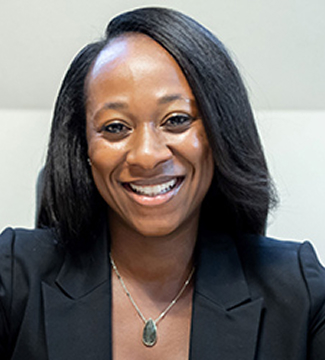
Aaliyah Baker, Ph.D.
Aaliyah Baker, Ph.D. is an associate professor in the Department of Educational Administration. She currently teaches three courses: EDU 934 – Leadership and Problems of Practice in Organizations; EDU 954 – Communication and Community Engagement; and EDU 991 – Qualitative Research.
She completed her B.A. at Marquette University and her M.S. and Ph.D. at the University of Wisconsin. View a full list of her awards and published works on her faculty profile page.
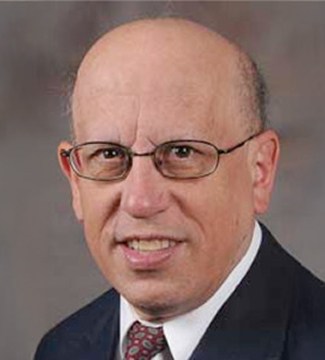
Charles J. Russo, J.D., Ed.D.
Charles J. Russo, J.D., Ed.D. is the Director of the Ph.D. Program in Educational Leadership. He also serves as a research professor of law. Dr. Russo has authored or co-authored more than 350 articles in peer-reviewed journals; authored, co-authored, edited, or co-edited 83 books; and has more than 1,350 publications focusing on issues in education law.
Dr. Russo completed his B.A., J.D., and Ed.D. at St. John’s University, and his M.Div. at the Seminary of the Immaculate Conception. View a full list of his professional activities, published works and more on his faculty profile page.
What Can You Do With an Online Ed.D. Degree?
An online Ed.D. degree prepares you to lead organizations in the public and private sectors.
Ed.D. graduates may pursue careers as:
- City and local government officials
- Public policy leaders
- Postsecondary education administrators
- Health services executives
- Nonprofit and charitable organizers
Is an Ed.D. Worth It If You Already Have a Master’s?
Earning an Ed.D. unlocks new opportunities that may not be available with solely a master’s degree. The additional training and education an Ed.D. offers is in increasingly high demand in organizations across fields. As an Ed.D. degree holder, you can pursue careers across diverse sectors and have an impact on pressing 21st-century issues.
Projected employment growth in postsecondary education will allow Ed.D. graduates to pursue administrative or organizational careers in college and university systems. The healthcare sector is also increasingly in need of organizational professionals as it expands. The Bureau of Labor Statistics estimates that an average of 62,300 medical and health services manager positions will open per year over the next 8 years.1
Certain high-ranking positions like university president, chancellor, or provost may either require or strongly prefer candidates with a terminal degree. Other top positions like dean, vice president, or vice chancellor would benefit from the knowledge and skillset development an Ed.D. provides.
As a graduate of Dayton’s online Ed.D. in Leadership for Organizations program, you will gain a deeper understanding of organizational systems and practical experience to truly influence change where it is needed in your organization and community.
Ed.D. Jobs and Employment Growth
Graduates of the online Ed.D. program will be prepared to pursue leadership positions related to K–12 education, nonprofits, medical centers and health organizations, government agencies, and private companies.
Leadership positions, especially in healthcare, are slated to grow over the next eight years. According to the Bureau of Labor Statistics, postsecondary education administrator positions2 will grow about 2%, but medical and healthcare service manager3 positions are slated to grow 24% over the next eight years.
Skills You’ll Develop
- Provide leadership in organizations and the communities they serve
- Develop educational programs in organizations
- Collaboratively design and implement policy
- Assess learning and evaluate programs
- Lead change and improvement efforts
Make a Difference as an Organizational Professional
What to Expect in Dayton’s Online Doctor of Education Program
As an early adopter of online education, the University of Dayton provides online students with advanced learning technology and an interface that re-creates the classroom learning experience. Students are able to:
Attend weekly, live-streaming classes featuring HD video and small breakout rooms.
Access coursework through a mobile-friendly and interactive online classroom.
Connect with faculty and classmates using social tools in the virtual campus.
Share screens, collaboratively edit documents and conduct polls and surveys
Frequently Asked Questions About Dayton’s Online Ed.D.
-
The primary difference between an Ed.D. and a Ph.D. is their focus. An Ed.D. prepares you to lead and apply research, while a Ph.D. prepares you to research and publish. Ed.D. programs are designed for educational practitioners and organizational leaders who want to solve real-world problems, but Ph.D. programs focus on developing new theoretical knowledge and typically prepare graduates for careers in university research and academia.
In short, both degrees hold prestige, but they demonstrate different areas of expertise.
-
Yes, you can complete an Ed.D. online while continuing to work full-time. Most online Ed.D. programs, such as the Doctor of Education at the University of Dayton, are specifically designed for working professionals. They offer flexible coursework and virtual live-streaming classes that allow you to balance your career and personal responsibilities while earning your degree.
-
For a high-quality online Ed.D. program, students should expect to spend approx 10-12 hours per week, per course, on coursework, readings, and research. Because the curriculum is designed for working professionals, this workload fluctuates depending on the course, with a larger portion of the time dedicated to working on your applied dissertation project.
-
Yes, the online Ed.D. program at the University of Dayton includes two in-person, on-campus immersions in Dayton, Ohio. These immersions total three credits of your curriculum and typically take place at the end of your first and third years. They offer valuable opportunities to connect face-to-face with your cohort, network with faculty, and build community.
-
Earning an Ed.D. typically takes three years. While some “fast-track” programs advertise completion in 18 to 24 months, these programs often require continuous study without breaks and may compromise deep practical training.
A standard, high-quality program like the University of Dayton’s online Ed.D. consists of 60 credits and is structured to be completed comfortably in 36 months.
-
A Dissertation-in-Practice (DiP) focuses on analyzing and solving an active, complex “problem of practice” within your current organization or field. Unlike a traditional Ph.D. dissertation, which focuses on generating new academic theory, a Dissertation-in-Practice allows you to apply research methods directly to real-world operational challenges, making your studies immediately useful to your workplace.
-
Admission to Ed.D. programs requires a master’s degree from an accredited university (often with a minimum GPA of 3.0) and several years of professional experience.
For the University of Dayton’s online Ed.D., submitting GRE standardized test scores is completely optional. Admissions committees prioritize your professional track record, letters of recommendation, and your passion for leading change.
-
Fully funded doctoral programs (which waive tuition and pay a living stipend) are highly competitive and are almost exclusively reserved for full-time, on-campus Ph.D. students who work as research assistants.
For part-time, online Ed.D. programs, students typically fund their education through a combination of federal financial aid, student loans, and employer tuition assistance programs.
- Medical and Health Services Managers. (2026). U.S. Bureau of Labor Statistics. Retrieved August 11, 2026. ↩︎
- Postsecondary Education Administrators. (2026). U.S. Bureau of Labor Statistics. Retrieved July 17, 2026. ↩︎
- Medical and Health Services Managers. (2026). U.S. Bureau of Labor Statistics. Retrieved August 11, 2026. ↩︎